Mark, a 42-year-old project manager, did not need another article telling him to stretch more. What he needed was a bed that stopped turning eight hours of rest into six hours of tossing, overheating, and waking up stiff through his lower back. This case study switching to hybrid reduced back pain because the change was not magic. It was mechanical. Once his sleep surface started supporting alignment instead of fighting it, his mornings changed.
Mark’s situation is common among adults who spend long days sitting, commute too much, and sleep on a mattress long past its useful life. His old bed was a basic all-foam model, soft through the center and warmer than it should have been. At first it felt comfortable. Over time, that comfort translated into sagging under his hips, poor lumbar support, and constant repositioning. He also shared the bed with his wife, and every turn she made transferred across the surface.
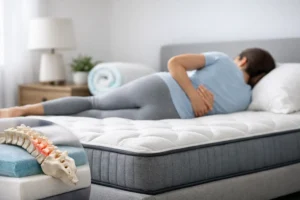
By the time he started looking for a replacement, the pattern was clear. He woke up with a pain score of 7 out of 10 most mornings, especially across the lower back and into the right hip. The pain usually eased after a hot shower and moving around for 30 to 45 minutes, which is often a sign that overnight posture is part of the problem. He was not looking for a mattress that felt plush in a showroom. He wanted one that could hold his spine in a better position, relieve pressure around the shoulders and hips, and sleep cooler.
Why his old mattress kept aggravating his back
The issue was not simply that the mattress was old. It was that its construction no longer matched his body’s needs. Mark sleeps mostly on his side but drifts partly onto his back during the night. That combination usually needs two things at once – pressure relief at the shoulder and hip, plus enough pushback under the waist and pelvis to keep the lumbar area from dropping too far.
His old foam mattress compressed unevenly. The heavier parts of his body sank deeper, while the support under the lower back flattened out. That created a slight hammock effect. It may not sound dramatic, but over seven or eight hours, even a small alignment issue can load the back muscles and joints repeatedly.
Heat was another factor. When a mattress traps warmth, sleep often becomes lighter and more fragmented. More wakeups mean more position changes, more tension, and less real recovery. Mark was not only waking sore. He was waking tired.
The switch: a hybrid built for support and pressure relief
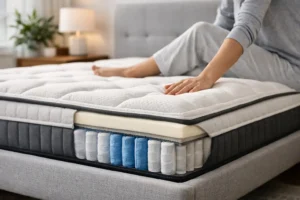
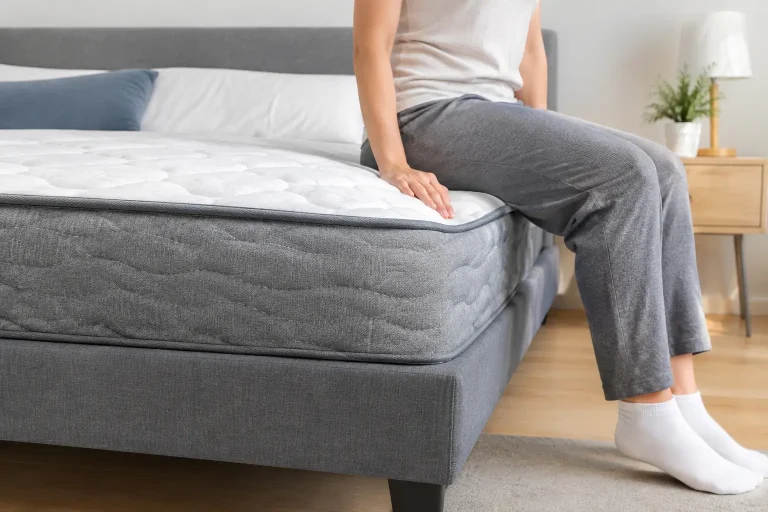
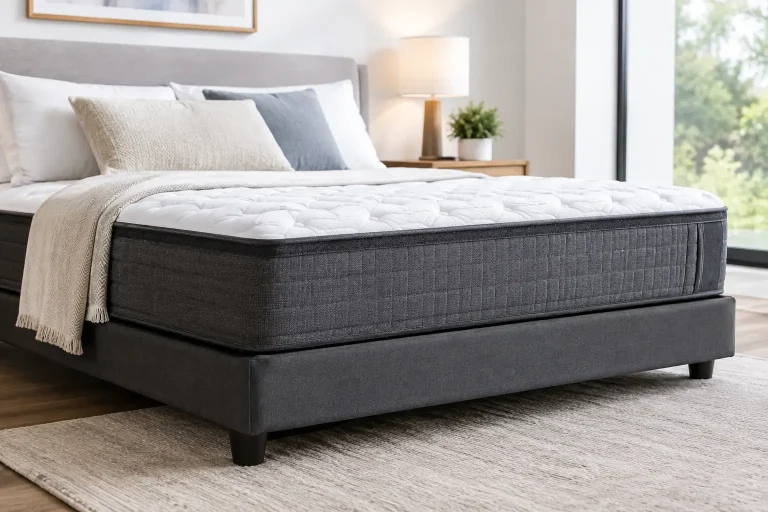
After comparing options, Mark moved to a medium-firm hybrid mattress with three features that mattered most for his symptoms: individually pocketed coils for structured support, comfort layers designed to cushion pressure points, and improved airflow to reduce heat buildup.
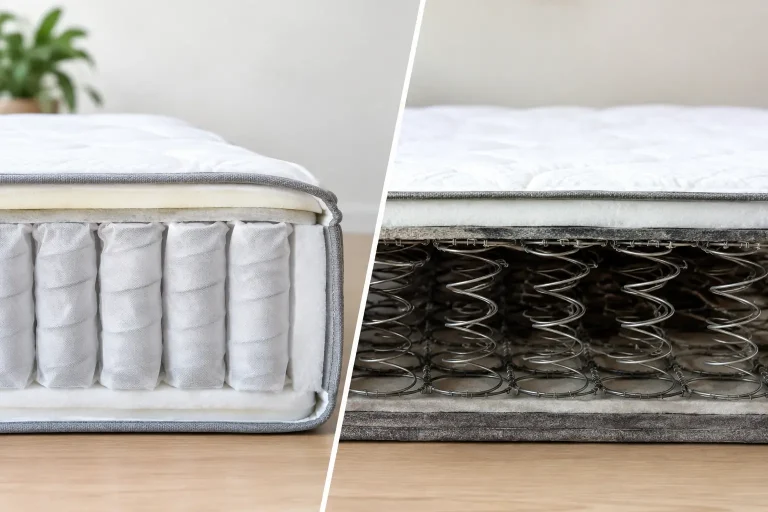
That combination is where hybrid construction tends to outperform a basic foam or basic spring design for people with back pain. The coil system adds targeted lift and stability, especially through the midsection. The comfort layers soften the contact points so the mattress does not feel hard or rigid. When those layers are chosen well, you get contouring without collapse.
This is also where shoppers can get misled by marketing. Soft does not always mean pressure relief, and firm does not always mean support. For Mark, medium-firm worked because it balanced both. A mattress that was softer might have eased shoulder pressure at first but let his hips sink too far again. A mattress that was firmer might have held his pelvis up but created tension through the shoulder and side of the ribcage.
The hybrid model he chose also reduced motion transfer better than his old bed. That mattered more than he expected. Fewer disturbances from his partner meant fewer unconscious brace-and-twist movements overnight, which can aggravate a sensitive lower back.
Case study switching to hybrid reduced back pain: the first 30 days
The first week was not perfect. That is worth saying clearly because realistic expectations matter. Mark noticed better support immediately, but his body still needed time to adjust. On nights one through four, he described the mattress as “more stable” and “less hot,” but he still woke up with some tightness. By the end of week two, the morning pain score had dropped from a consistent 7 to around 4.
The biggest change was not dramatic pain relief overnight. It was the steady reduction in stiffness. He was no longer rolling out of bed carefully and waiting half an hour for his back to loosen. He could stand upright sooner, move more naturally, and start the day without feeling like he had already used up energy.
By day 30, his average morning discomfort was down to 2 or 3 out of 10. He still had occasional flare-ups after long days at his desk or after travel, but the mattress had stopped being part of the problem. In practical terms, that meant fewer wakeups, better temperature control, and a surface that kept his hips and lower back in a more neutral position.
His wife noticed a different improvement. Because the pocketed coil system absorbed movement more effectively, she was waking less often when he changed position. Better sleep for one partner often improves sleep for both.
What likely made the difference
No honest case study should pretend one purchase fixes every cause of back pain. Mark also started taking short walking breaks during the workday. But the clearest shift happened after the mattress change, and the likely reasons are straightforward.
First, better spinal alignment lowered overnight strain. A supportive hybrid helps distribute body weight more evenly, especially through the heaviest zones. That can reduce the muscular guarding that builds up when the lower back spends hours unsupported.
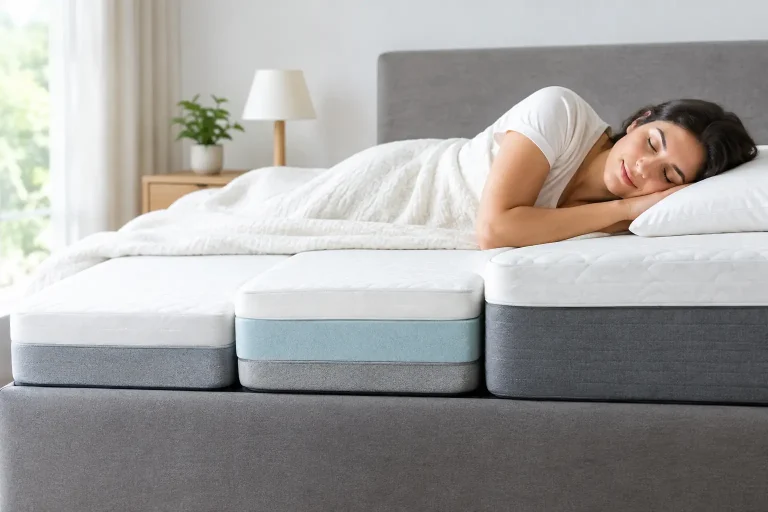
Second, pressure relief improved without sacrificing structure. This matters for side sleepers in particular. If the shoulder and hip cannot sink enough, the body twists to compensate. If they sink too much, the waist and pelvis lose support. The right hybrid setup narrows that gap.
Third, cooler sleep improved sleep continuity. Mark’s old mattress held heat, and that led to more restless sleep. The hybrid’s airflow and more breathable upper layers helped him stay asleep longer, which likely improved recovery.
Fourth, motion isolation reduced disruption. It is easy to underestimate how much partner movement chips away at sleep quality until it stops happening.
When switching to a hybrid helps – and when it may not
This case study switching to hybrid reduced back pain, but it does not mean every hybrid is right for every sleeper. Construction matters more than the label.
A hybrid can help if your current mattress sags, lacks midsection support, traps heat, or transfers too much movement. It can also help if your body needs both contouring and pushback rather than an all-soft or all-firm feel.
It may not be the full answer if your pain is driven by an acute injury, a medical condition, or poor daytime ergonomics that continue to overload your back. In those cases, the mattress should support recovery, not act as a substitute for treatment.
Weight and sleep position also change the equation. A lighter sleeper may prefer a slightly softer hybrid to get enough contouring. A heavier sleeper often does better with a firmer, more resilient support system. Back sleepers usually need stronger lumbar support, while side sleepers need more pressure relief at the shoulder and hip.
That is why the best mattress for pain relief is rarely the one with the loudest claim. It is the one whose materials and support profile match how you actually sleep.
What shoppers should learn from this case study
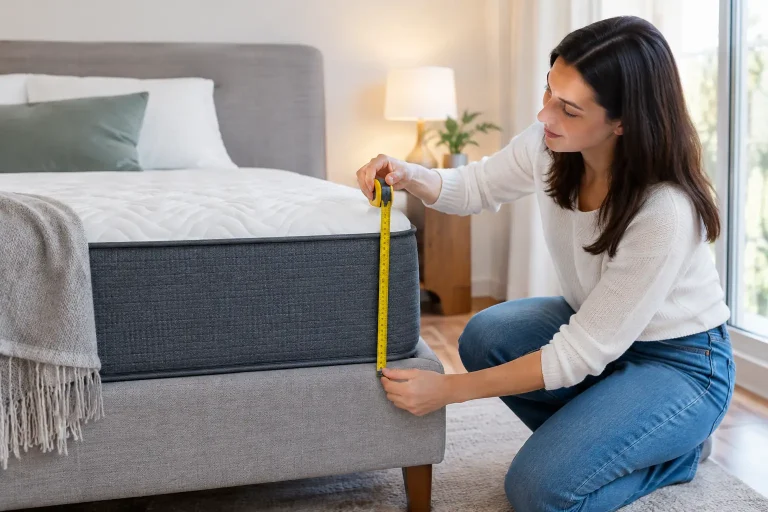
If you wake up sore and feel better only after moving around, your mattress deserves scrutiny. Start with the basics. Look at whether the surface is sagging, whether your hips are dipping too low, whether you sleep hot, and whether your partner’s movement wakes you up.
Then look beyond vague comfort language. A strong hybrid should explain how each layer works. Pocketed springs are not just a feature line. They are there to create structured support and better motion control. Latex or responsive foam is not there just for softness. It helps relieve pressure while keeping the body from sinking too deeply. Cooling materials are not cosmetic. They support longer, less interrupted sleep.
This is where Azure Mattress has built a strong case for hybrid design. The value is not in piling on materials for the sake of it. The value is in combining comfort, spine support, and temperature control in a way that produces a measurable difference night after night.
Mark’s result was not about chasing luxury. It was about choosing a mattress that finally worked with his body instead of against it. If your current bed leaves you stiff, hot, and unrested, the smartest next step may be less about enduring the pain and more about correcting the surface you spend a third of your life on.