One partner sinks in. The other feels like they are sleeping on top of the bed. By morning, one person has a sore lower back, the other woke up from every turn, and both are wondering why a mattress that felt fine in the showroom falls apart at home.
That is the real challenge when two people with different body weights share a bed. The best mattress is not the softest one, the firmest one, or the one with the most hype. It is the one that can hold two bodies differently at the same time while still keeping the surface stable, cool, and quiet.
What makes the best mattress for couples different weights need?
When couples have a noticeable weight difference, the mattress has to do more than feel comfortable for ten minutes. It has to keep both sleepers in healthy alignment for eight hours. That means pressure relief for shoulders and hips, enough pushback to stop the heavier sleeper from sagging, and enough responsiveness to prevent the lighter sleeper from feeling like they are rolling toward the middle.
A basic all-foam mattress can work for some couples, but it often struggles when one partner is significantly heavier. If the comfort layers are too soft, the heavier partner can compress them too deeply and throw off spinal alignment. If the bed is too firm to solve that problem, the lighter partner may end up with pressure points and numb shoulders.
This is why hybrid construction is often the smarter choice. A well-designed hybrid combines contouring comfort layers with a structured coil system underneath. That mix makes it easier to balance support and cushioning across different body types.
Why weight differences change mattress performance
Mattress feel is not fixed. It changes depending on how much pressure is placed on the surface. A 130-pound sleeper and a 230-pound sleeper can lie on the same bed and describe it completely differently.
For the lighter sleeper, a mattress may feel firm because they are not compressing the top layers enough to get pressure relief. For the heavier sleeper, the same mattress may feel medium or even soft because they engage deeper layers more quickly. This is where many couples go wrong. They shop based on a single comfort label instead of looking at the build.
The better approach is to judge a mattress by how its layers work together. Latex or responsive foam in the top section can help with pressure relief without excessive sink. Individually pocketed coils in the support core can provide more targeted reinforcement under heavier areas like the hips and lower back. That combination usually gives couples a more balanced sleep surface than a mattress that relies too heavily on one material.
The features that matter most
Support that adapts instead of collapsing
For couples with different weights, support is the first filter. If the mattress does not hold the spine in a neutral position, comfort will not last. The heavier partner typically needs stronger support through the center third of the bed to prevent the hips from dipping too low. The lighter partner still needs enough contouring so the bed does not feel flat or rigid.
This is where pocket spring systems stand out. Individually wrapped coils compress more independently than old connected spring units, which means the mattress can respond to each sleeper with more precision. That helps reduce the hammock effect that makes couples roll inward and wake up with stiffness.
Motion isolation that actually protects sleep
Couples often focus on comfort and forget disturbance. But if one partner is heavier, even normal repositioning can create more force through the mattress. A poor-quality spring bed transfers that movement across the entire surface.
The best mattress for couples different weights often includes individually pocketed coils paired with stabilizing comfort layers. That construction absorbs movement before it spreads. The result is a sleep surface that feels steady rather than shaky, especially if one person gets up earlier or changes positions often.
Pressure relief without swallowing you
The lighter sleeper usually needs more surface cushioning around the shoulders and hips. The heavier sleeper also needs pressure relief, but not at the expense of support. Too much plush foam can feel cozy at first and then create deep sink, trapping heat and stressing the lower back.
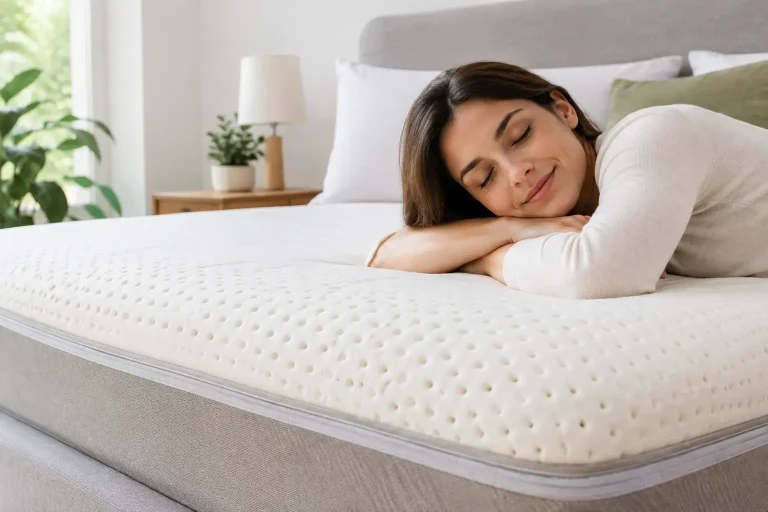
Responsive materials matter here. Latex and higher-grade comfort foams tend to relieve pressure while recovering shape faster. That means less body impression, easier movement, and a more buoyant feel that works better for couples than overly soft memory foam.
Cooling that remains consistent through the night
Heavier sleepers often sleep warmer because more of the body is in contact with the mattress surface. Add two people under one comforter and heat buildup becomes a real issue.
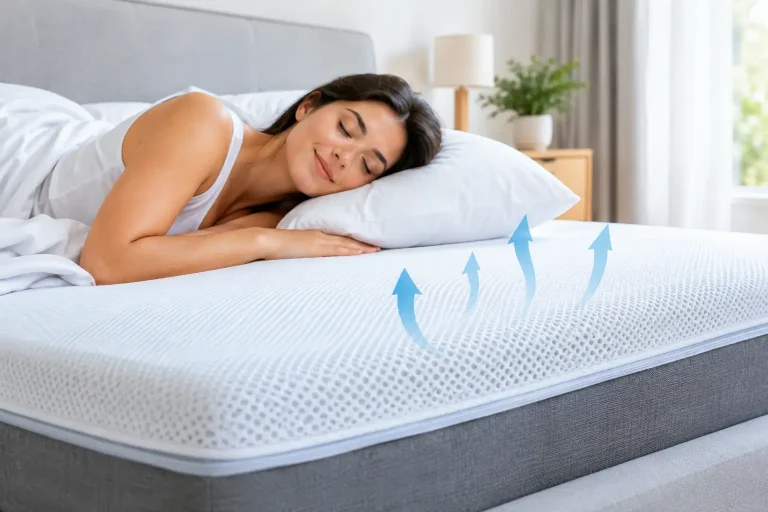
A breathable hybrid usually performs better than dense foam alone. Air can move through the coil layer, and cooling gel foams or ventilated latex can help release heat rather than trap it. If one or both partners wake up hot, cooling is not a luxury feature. It is part of whether the mattress works.
Best firmness for couples with different body weights
For most couples, medium-firm is the safest starting point. It usually gives enough support for the heavier partner without becoming punishing for the lighter one. But that does not mean every medium-firm mattress is equal.
A medium-firm hybrid with a pressure-relieving top and strong underlying support can feel far more balanced than a medium-firm foam bed that softens too much under weight. The label matters less than the engineering.
If the weight gap is modest, around 30 to 50 pounds, a well-built medium or medium-firm model is often enough. If the difference is larger, or if the heavier partner has back pain, the couple may need a firmer support system with more responsive comfort layers on top. That creates support first, then comfort, instead of the other way around.
Signs a mattress is not working for both partners
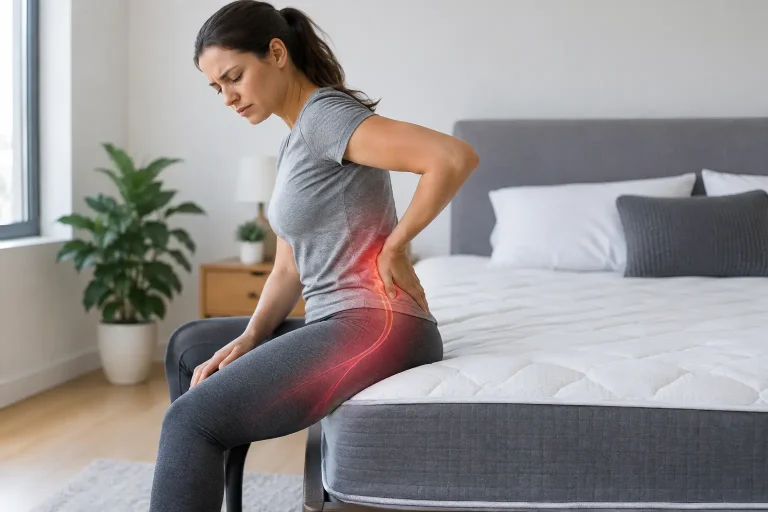
The problem is not always obvious on night one. Sometimes a mattress feels comfortable initially and then shows its weaknesses over a few weeks. If one partner consistently wakes with lower back pain, if the lighter sleeper feels pressure at the shoulders, or if either person drifts toward the center, the support balance is off.
Heat retention is another clue. So is motion transfer that wakes one partner whenever the other rolls over or gets out of bed. These are not small annoyances. They are signs the mattress is failing at the basic job of shared sleep performance.
Why hybrid mattresses are often the strongest choice
For couples with different weights, hybrids solve several problems at once. They combine contouring comfort, orthopedic-style support, and stronger airflow in a way that simpler constructions often cannot.
A quality hybrid with latex, cooling gel foam, and individually pocketed springs gives each sleeper a better chance of getting what they need from the same surface. The top layers cushion joints and reduce pressure. The coil core supports spinal alignment and limits motion spread. The open structure also helps the bed sleep cooler.
That is why couples shopping for pain relief and fewer sleep disruptions often land on this category. A mattress like this is built for performance, not just first-touch softness. If you are comparing options, focus less on marketing terms and more on how the comfort layers and support system are designed to work together. Azure Mattress, for example, centers this around pressure relief, spinal support, and zero-disturbance sleep, which are exactly the pressure points most couples are trying to solve.
What to look for before you buy
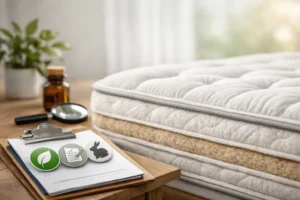
Do not choose based on softness alone. Look for a mattress with a structured support core, pressure-relieving but responsive comfort materials, and real cooling features rather than vague claims. Certifications like Oeko-Tex and CertiPUR-US can also provide reassurance about material quality.
A generous trial period matters because shared comfort is hard to judge in one night. Free returns reduce the risk if the feel is not right for both people. Warranty coverage is also worth checking, especially for couples worried about sagging over time.
Size matters too. Even the best mattress can feel crowded if two sleepers are sharing a full or queen and one or both move around a lot. If the budget and room allow, a king can reduce disturbance simply by giving each partner more usable space.
The smart way to choose
If one partner is much lighter and the other needs serious support, aim for balance rather than compromise. That usually means a medium-firm hybrid with strong edge support, pocketed coils, and comfort layers that relieve pressure without deep sink. If both partners already deal with back pain, err slightly firmer. If the lighter partner is very side-sleep dominant, make sure the top layers have enough give through the shoulders.
There is no single mattress that feels perfect to every couple. But there is a clear pattern in what works best. Shared sleep gets better when the mattress can isolate movement, regulate heat, and keep each spine supported without forcing both people into the same feel.
The right mattress should not make either partner adapt to it. It should be engineered well enough to support both of you, night after night, without the usual trade-off of one person sleeping well and the other just putting up with it.