A mattress can change how your body feels at 6 a.m., but paying for it should not create a new source of stress. When comparing mattress installment plans versus credit, the better choice is not always the option with the lowest payment shown at checkout. It is the option that fits your budget, protects your cash flow, and lets you invest in the support, cooling, and motion isolation your sleep truly needs.
Mattress Installment Plans Versus Credit: The Core Difference
An installment plan divides the mattress price into fixed payments over a set period. Depending on the provider and the offer, it may be interest-free if every payment is made on time. You know the payment amount, the number of payments, and ideally the total cost before you place your order.
Credit, usually through a credit card, gives you more flexibility. You can charge the mattress and pay any amount above the minimum due each month. That flexibility can be useful, but it also makes it easier for a purchase to last far longer than planned. If you carry the balance after any promotional period ends, interest can add substantially to the true cost of your mattress.
The real decision comes down to structure versus flexibility. Installments provide a finish line. Credit provides more control over the monthly amount, but demands more discipline to avoid expensive interest.
Why Payment Method Matters for Better Sleep
A basic mattress may look less expensive at first, but it can cost you comfort night after night if it lacks pressure relief, airflow, or stable spinal support. For people waking with lower back stiffness, sore shoulders, or overheating, choosing a well-engineered hybrid mattress can be a practical health and recovery decision rather than a luxury purchase.
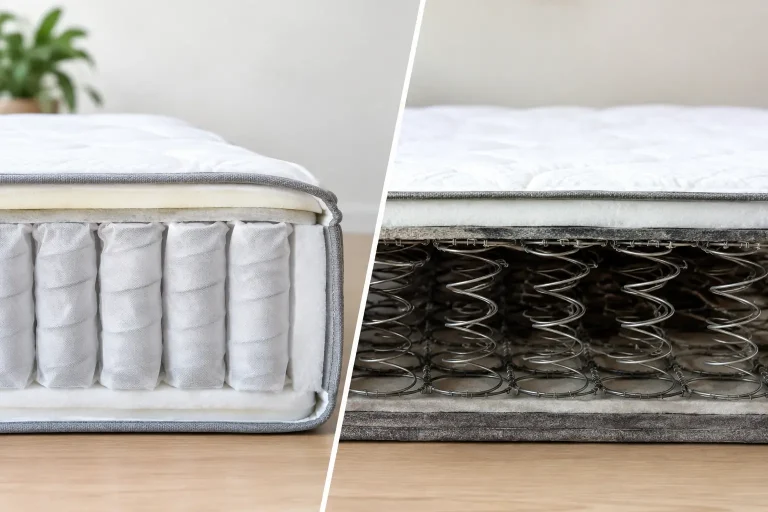
That is where a clear payment plan can help. A predictable monthly amount may make it easier to choose the mattress that addresses the problem instead of settling for the cheapest available option. Pocketed coils can help support alignment and reduce movement transfer. Latex and responsive comfort layers can ease pressure at the shoulders and hips. Cooling gel foam and breathable construction can help prevent the trapped heat that interrupts deep sleep.
Still, affordability is not the same as a low monthly number. A $60 payment can feel manageable, but it deserves the same scrutiny as the full price. How many payments are required? Is there interest? Is there a late fee? Will a missed payment affect your credit profile? Those details determine whether convenience remains convenient.
When an Installment Plan Makes Sense
An installment plan is often a strong fit when you have stable monthly income and can comfortably cover the payment without reducing your ability to pay rent, utilities, groceries, insurance, or existing debt. The key word is comfortably. A sleep upgrade should support your life, not squeeze your budget every month.
Fixed payments are especially useful for couples and households planning a larger purchase. You can include the cost in your monthly budget from day one rather than guessing how much of a credit card balance you will pay down. If the plan is genuinely 0% interest and there are no hidden administration charges, spreading payments may preserve cash for unexpected expenses while allowing you to replace an old, sagging mattress now.
Installments can also create healthy buying boundaries. Once the schedule is complete, the purchase is complete. There is no revolving balance lingering in the background, and no temptation to keep adding unrelated purchases to the same account.
However, an installment plan is not automatically the better deal. Some plans charge interest, late fees, or deferred interest. Deferred interest means that if you do not pay the full balance by a specified deadline, you may owe interest calculated from the original purchase date. Read the agreement closely before accepting any offer labeled “no interest.” The timing and conditions matter.
When Using Credit Can Be the Better Option
Using a credit card may make sense if you can pay the statement balance in full before interest applies. In that situation, a card can offer a short payment window, purchase protections that may be valuable, and the convenience of keeping your spending in one place.
A card can also be useful when the mattress retailer offers a meaningful discount for card payment, or when you are using a promotional 0% annual percentage rate that you fully understand. The important part is having a repayment date, not just a minimum payment. Divide the purchase total by the number of interest-free months, then set aside that amount every month. If the result does not fit your budget, the promotion does not make the mattress affordable yet.
Credit becomes riskier when you already carry a balance or when your card’s standard interest rate is high. Minimum payments can make an otherwise sensible purchase far more costly. A premium hybrid mattress built for years of use may still be worth the investment, but not if financing charges inflate its price far beyond the value of its materials and performance.
Compare Total Cost, Not Just Monthly Payments
Before choosing either option, compare the exact total you will pay. This takes only a few minutes and can prevent a frustrating surprise later.
Start with the mattress price after any legitimate promotion. Add taxes, delivery fees if applicable, accessories you intend to buy, interest, account fees, and possible late charges. Then compare that figure with the installment plan total and the likely credit card total based on how quickly you will repay it.
For example, a $1,200 mattress paid through six interest-free installments costs $1,200, assuming no fees and on-time payments. The same $1,200 on a credit card can cost the same if you repay it in full before the due date. But if you carry that balance at a high rate for many months, the final cost can rise quickly.
Do not let a long repayment period disguise the true price. A lower monthly payment is helpful only when the total cost remains reasonable and the term does not outlast the useful benefit of the purchase. A mattress should be helping you sleep better now, not still appearing on your statements years after it has lost its support.
Consider Your Mattress Trial and Return Policy
Payment is only one part of buying with confidence. A mattress feels different after several nights than it does during the first five minutes of lying on it. Your body needs time to adjust, particularly when you are moving from a worn-out traditional spring mattress to a supportive hybrid design.
Check how returns work if you use financing. If the mattress is returned, ask whether the installment balance is canceled promptly and whether any payments already made are refunded. If you paid by credit card, understand how the refund is processed and how long it may take to appear on your account.
A clear trial period, free delivery, straightforward returns, and a meaningful warranty reduce the risk of buying online. These policies matter because the goal is not simply to finance a mattress. The goal is to find one that keeps your spine supported, relieves pressure, stays cooler through the night, and minimizes disruption when your partner moves.
Choose the Mattress First, Then the Payment Plan
It is easy to reverse this order and shop only by monthly payment. That approach can lead to a mattress that looks affordable but fails to solve the reason you are shopping in the first place.
Start with your sleep needs. If you wake with aches, prioritize stable support and pressure distribution. If you sleep hot, look for breathable layers and temperature-regulating materials. If a partner’s turning wakes you, focus on individually pocketed coils and motion-isolating comfort layers. Azure Mattress, for example, centers its hybrid construction around these practical outcomes: comfort, spinal support, and cooling.
Then select the payment option that allows you to buy that level of performance responsibly. A fixed, interest-free plan may offer clarity. A credit card paid in full may offer convenience. Neither is universally better because your income, existing obligations, repayment habits, and the terms in front of you all matter.
Before you click buy, say the full payment commitment out loud, not just the monthly number. If it still feels comfortable, you can focus on the better payoff: calmer nights, less morning stiffness, and a bed that supports the recovery your body needs.