You can usually tell when a mattress is built to sell a story instead of delivering sleep. It smells sharp the first week. It traps heat by 2 a.m. It feels supportive for a month, then your hips start sinking and your lower back starts negotiating.
Eco friendly mattress materials are often treated like a “nice-to-have.” For most people shopping seriously – especially if you wake up stiff, run hot, or share a bed – the materials are not just a values choice. They change how the mattress supports your spine, how it handles temperature, and how long it stays consistent.
What “eco-friendly” really means in a mattress
A mattress can be “green” in more than one way, and those ways do not always line up.
Some materials are renewable (like natural latex). Some reduce chemical exposure (like low-VOC foams). Some are recycled (like certain steel coils or polyester fibers). Some are simply more durable, which is an underrated sustainability win because replacing a mattress early is wasteful no matter how it’s marketed.
So the practical question is not “Is this mattress eco-friendly?” It’s: which eco-friendly choices actually improve your sleep outcomes – comfort, spine and joint support, and overheating control – without creating new problems.
Eco friendly mattress materials and how they feel at night
Natural latex (and why it’s a performance material)
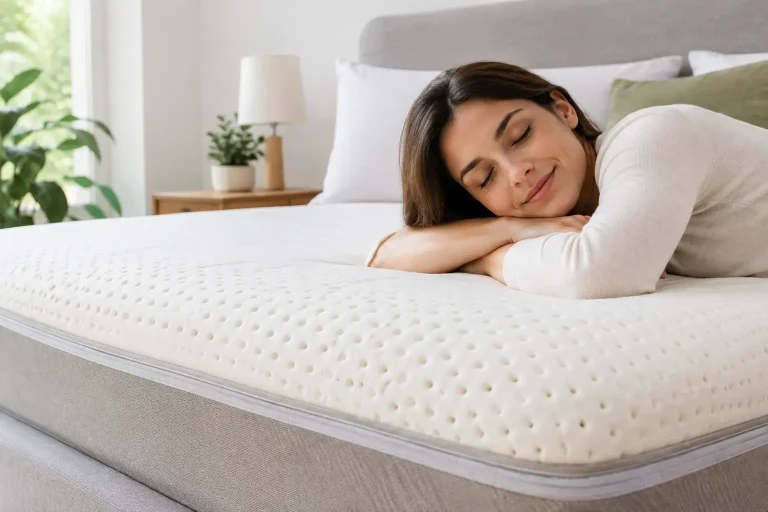
Natural latex is one of the strongest intersections of comfort engineering and sustainability. It’s derived from rubber tree sap, and in a well-built mattress it can deliver a balanced mix of pressure relief and pushback.
If you deal with back pain, latex matters because it tends to compress without letting you “bottom out.” Your shoulders and hips can sink enough to reduce pressure, while your midsection stays more supported, which helps keep the spine from bowing. Latex is also naturally springy, so you get easier movement – a small detail that makes a big difference if you change positions often or feel stuck in softer foams.
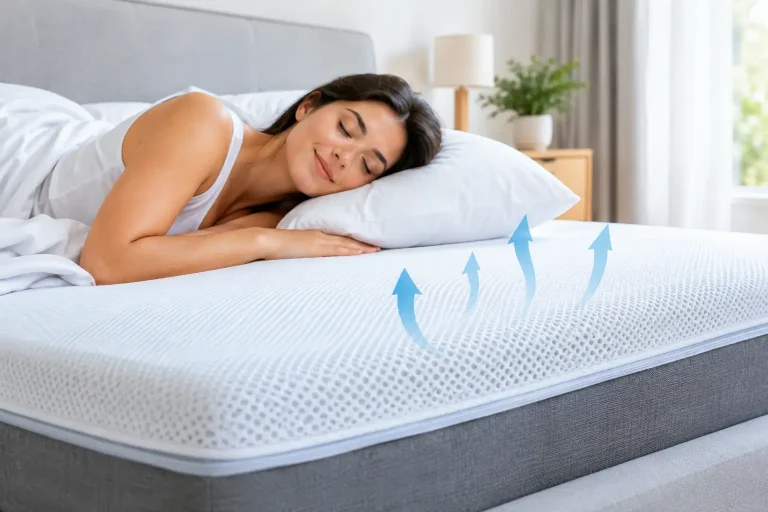
Heat is another reason latex gets chosen in higher-performance builds. Compared with dense memory foam, latex generally sleeps cooler because it doesn’t hug the body as tightly, and many latex layers are aerated to improve airflow.
Trade-off: latex is not one single feel. Some people love the buoyant response, others expect a slow-melting memory foam sensation and are disappointed. It can also cost more upfront, but it often pays back in durability.
Plant-based foams and low-VOC polyurethane
A lot of mattresses use polyurethane foam somewhere – often as a comfort layer, transition layer, or edge support component. “Plant-based foam” usually means a portion of the petrochemical polyols have been replaced with plant-derived inputs. It can be a step in the right direction, but it’s not automatically cleaner or higher-performing.
What tends to matter more for most buyers is emissions and quality controls. Look for foams that are certified for low chemical emissions and screened for harmful substances. This reduces the risk of strong off-gassing and supports healthier indoor air, which is especially relevant if you’re sensitive to odors or have kids in the home.
Trade-off: plant-based does not mean biodegradable, and it does not guarantee durability. A low-quality “green” foam can still soften too quickly and compromise spinal alignment.
Organic cotton (breathability and skin comfort)
Cotton is commonly used in mattress covers. When it’s organic, the benefit is mainly about agricultural inputs and chemical processing. From a sleep-performance angle, cotton can help with breathability and moisture management.
A breathable cover matters more than people think because it is the first layer your body heat meets. If you sleep hot, a well-made cotton cover can feel less clammy than synthetic knits. If you sweat at night, cotton can help reduce that slick, overheated feeling.
Trade-off: cotton is not inherently cooling. It’s breathable, but it doesn’t actively pull heat away the way phase-change fabrics or engineered cooling textiles can. Also, “organic” should be backed by credible certification, not just a label.
Wool (temperature regulation without chemicals)
Wool is a classic natural temperature regulator. It can buffer humidity, which helps the bed feel more stable across seasons – less swampy in summer, less icy in winter. Wool is also commonly used as a natural fire barrier in place of chemical flame retardants.
If you are trying to reduce chemical additives in your sleep environment, wool is one of the most functional materials that can do double duty: comfort and compliance.
Trade-off: wool can be a problem for people with sensitivities to animal fibers, and it can slightly change the feel of the surface – often a touch firmer and less “slick” than synthetic batting.
Recycled steel coils (support with a lower footprint)
Steel coils are not renewable, but they can be highly recyclable. In a hybrid mattress, coils are also one of the most performance-forward components you can choose.
Individually pocketed springs are especially relevant for couples and pain relief. They compress more independently, which supports better spinal alignment and reduces motion transfer. If your partner’s movement wakes you up, a pocketed coil system can be the difference between broken sleep and true recovery.
Trade-off: coils can amplify pressure points if the comfort layers above them are too thin or low-quality. A good hybrid uses the coil system as a support engine, then tunes comfort with latex or high-grade foam.
Cooling gel foams and “infused” layers
Cooling gel infusions are often presented as an eco story, but they are usually a performance story: dispersing heat and improving initial cool-to-the-touch feel. Whether they are “eco-friendly” depends on the base foam quality and certification.
This is where honesty matters. If you are shopping eco friendly mattress materials primarily to sleep cooler, pay attention to the whole heat pathway: breathable cover, comfort layer that doesn’t trap heat, and a support core that allows airflow. A single infusion rarely fixes a heat problem by itself.
Certifications that actually help you compare
Marketing terms are cheap. Testing is not. Certifications are one of the few ways to reduce guesswork when you can’t see inside the mattress.
CertiPUR-US is a common baseline for polyurethane foams. It focuses on content and emissions standards. It won’t tell you the foam is “natural,” but it can reassure you that the foam meets specific limits for harmful chemicals and VOCs.
OEKO-TEX certifications are commonly used for textiles and can apply to covers and certain foam components depending on the product. It’s most useful when you care about what’s in direct contact with your skin and the immediate sleep environment.
Here’s the nuance: certifications do not replace good engineering. A certified foam can still be too soft for your body type, and a certified cover will not compensate for a weak support core. Use certifications to filter out risk, then evaluate the build for outcomes.
How to choose the right materials for your body and sleep problems
If your priority is back pain or stiffness, start with the support system and transition layers. A coil system with strong, consistent resistance paired with latex or a high-quality transition layer tends to keep the spine more neutrally aligned than thick, low-density foams that soften quickly.
If you run hot, prioritize airflow first. Breathable covers (cotton blends, some performance knits), less heat-trapping comfort layers (latex is a common winner), and a coil core that lets air move are usually more effective than chasing “cooling” buzzwords.
If you sleep with a partner, motion isolation is the deciding factor. Pocketed coils plus thoughtfully designed comfort layers can reduce ripple effects. Very bouncy builds can transfer more motion, while very soft foams can reduce motion but create alignment issues. The right hybrid aims for both: stable support and minimal disturbance.
If you’re eco-conscious and budget-conscious, focus on durability as your sustainability anchor. A mattress that holds its shape and support for years is often the greener choice than a cheaper “natural” option that needs replacing early.
The trade-offs nobody mentions (but you should plan for)
“Natural” can still trigger sensitivities. Latex and wool are both natural materials, and both can be irritating for some shoppers. If you have known allergies or asthma triggers, you may want to prioritize low-emission materials and washable barriers rather than assuming natural equals compatible.
Eco materials can change the feel. Latex has a buoyant response. Wool can create a slightly firmer, drier surface feel. If you want that deep memory foam hug, you may need a hybrid approach that balances a cooler, more resilient layer with targeted pressure relief.
Sustainability and convenience can clash. Some ultra-natural builds are heavier, harder to move, and less consistent in feel if manufacturing quality varies. For many households, the most sustainable mattress is one that arrives easily, fits your body, and keeps performing so you don’t restart the shopping cycle.
What a high-performance “eco” hybrid tends to look like
The most reliable formula for many adults is a hybrid that uses a strong coil system for alignment and airflow, then uses latex and certified foams to tune comfort and reduce pressure points.
That blend is popular because it addresses the real sleep problems that drive mattress regret: pain from poor alignment, overheating from dense comfort layers, and partner disturbance from unstable support cores.
If you’re looking for that kind of performance-led build with clear material callouts and a support-first design philosophy, Azure Mattress is one example of a brand that leans into the “science of sleep” approach – linking materials back to spine support, temperature control, and motion isolation rather than treating sustainability as window dressing.
A helpful closing thought: choose eco friendly mattress materials the same way you’d choose shoes for your body – not by the label, but by how reliably they support you step after step, night after night.