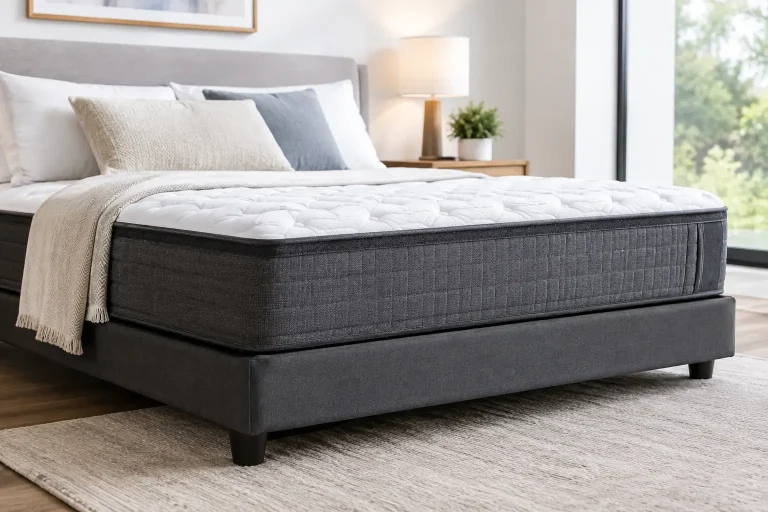
If your partner rolls over and you feel it like a small earthquake, the problem is not just light sleep. It is usually mattress design.
A lot of people assume all hybrids transfer motion because they contain coils. That is only half true. A poorly built hybrid can absolutely bounce and ripple across the bed. A well-engineered hybrid can do something very different – absorb movement at the surface, limit spread through the support core, and keep one side of the mattress noticeably calmer when the other side moves.
That is why hybrid mattress motion isolation is not a simple yes-or-no feature. It depends on how the comfort layers, coil system, and overall firmness work together.
What hybrid mattress motion isolation actually means
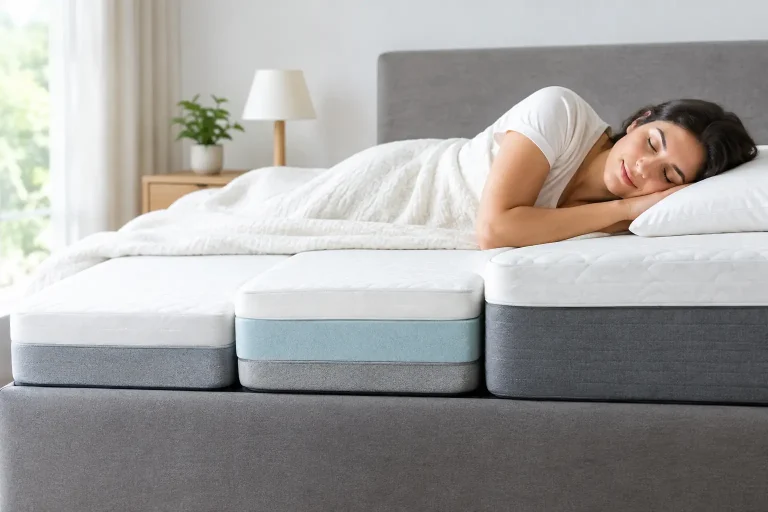
Motion isolation is the mattress’s ability to contain movement so it does not travel across the bed. For couples, this is one of the biggest predictors of uninterrupted sleep. If one person changes position, gets up early, or comes to bed late, the other person should not feel every shift.
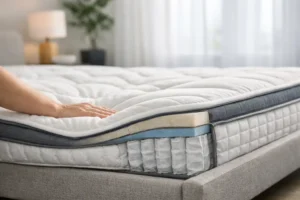
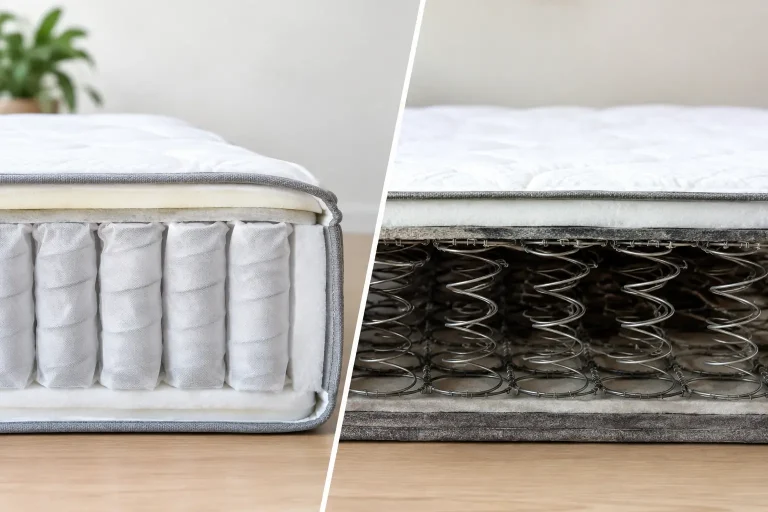
In a hybrid mattress, motion control comes from multiple layers doing different jobs. The foam or latex comfort layers absorb surface movement first. Beneath that, individually pocketed coils help prevent motion from spreading in one large wave across the mattress. Instead of all springs reacting together like a traditional innerspring, each coil compresses more independently.
That distinction matters. Old-style connected spring systems are usually worse for partner disturbance because the structure acts like one unit. Pocketed coils break up that chain reaction.
Why some hybrids perform better than others
Two hybrid mattresses can look similar on paper and feel completely different at night. The difference usually comes down to materials, coil design, and firmness balance.
Pocketed coils are the first big factor
If a hybrid uses individually wrapped coils, motion transfer is usually lower than in a mattress with interconnected springs. Each coil responds to pressure in a more localized way, which helps contain movement around the source.
But not all pocketed coil systems are equal. Coil count, coil gauge, zoning, and edge reinforcement all affect performance. A structured coil system with better separation between coils tends to reduce motion more effectively than a basic spring unit built mainly for cost savings.
Comfort layers can either absorb movement or amplify it
The top layers play a bigger role than many shoppers realize. Memory foam usually absorbs the most motion because it compresses slowly and dampens rebound. Latex is more responsive, which many people love for ease of movement and pressure relief, but it can pass along a little more motion than dense foam.
That does not mean latex hybrids are poor for couples. It means there is a trade-off. A latex hybrid often feels cooler, more buoyant, and easier to move on, while a memory foam hybrid may feel quieter when a partner shifts. Some designs combine both benefits by pairing responsive latex or cooling foam with stabilizing transition layers and a well-isolated coil core.
Firmness changes how motion feels
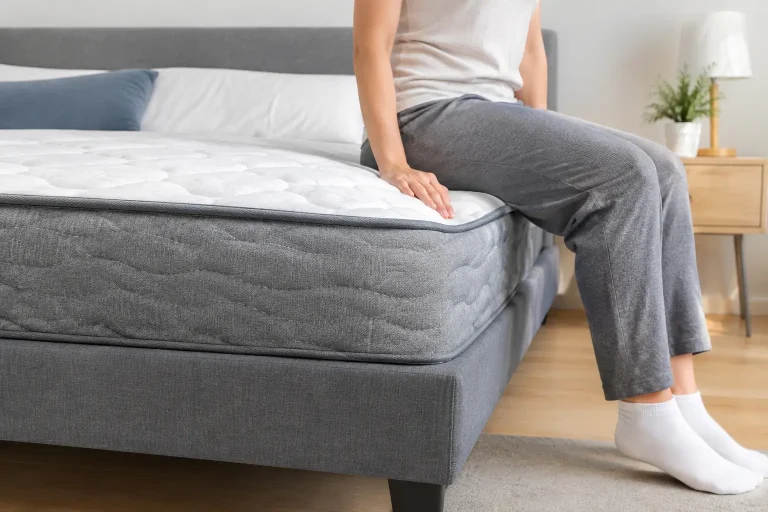
Softer mattresses often absorb more surface movement at first contact. Firmer mattresses may let you feel a sharper pushback because the comfort layers compress less before the support system engages.
Still, too soft is not the answer for everyone. If you wake up with back pain or stiffness, a mattress that isolates motion beautifully but lets your spine sag is not a real upgrade. The best choice is the one that reduces partner disturbance without sacrificing alignment and joint support.
Is a hybrid good for couples?
Yes – if it is built with motion control in mind.
For many couples, a hybrid is the sweet spot because it can provide pressure relief, airflow, and orthopedic-style support without the excessive bounce of a traditional spring mattress. That balance matters if one sleeper wants cushioning and the other needs stronger support through the back and hips.
This is where hybrids often outperform all-foam models in real homes, not just showrooms. They can offer better temperature regulation and stronger support for different body types, while still keeping movement more contained than old innerspring beds. If you and your partner sleep hot, have different schedules, or deal with aches and stiffness, a hybrid can solve more than one problem at once.
Signs a hybrid mattress may still transfer too much motion
A hybrid is not automatically low-motion just because the label says so. There are a few red flags to watch for.
If the mattress feels highly springy when you press down and release, that rebound may be noticeable at night. If the comfort layers are thin, movement can reach the coil layer too quickly. If the mattress is very firm and shallow in cushioning, you may feel your partner’s position changes more directly.
Weight difference also matters. A lighter sleeper paired with a heavier sleeper often notices motion more, especially if the heavier partner changes position frequently or gets in and out of bed often. In those cases, stronger surface cushioning and better coil separation become even more valuable.
How to evaluate hybrid mattress motion isolation before buying
Marketing claims are easy. What matters is whether the mattress construction supports the promise.
Look first at the support core. Individually pocketed coils are the standard to look for. Then consider what sits above them. Multiple comfort layers, especially those designed for pressure relief and contouring, usually help dampen movement before it spreads.
Pay attention to the mattress story as a whole. If the design emphasizes spine alignment, pressure relief, and temperature control together, that is usually a better sign than a mattress marketed only as plush or luxurious. Good motion isolation tends to be part of a broader engineering approach, not a standalone gimmick.
Certifications and material transparency can also help build confidence. When a brand clearly explains its foams, latex, and coil structure, it is easier to judge whether the mattress is likely to perform as promised.
What couples with back pain should prioritize
If you share a bed and deal with back pain, motion isolation should not be your only filter. Support quality matters just as much.
The right hybrid should keep your spine in a healthier position while reducing the jolt of partner movement. That usually means a mattress with enough cushioning to ease pressure points, plus a stable support system underneath to hold the hips and lower back more evenly. A mattress that is too soft can reduce motion but worsen alignment. A mattress that is too hard can support the back but create pressure and sleep disruption.
This is why many adults upgrading from a basic spring mattress notice such a clear difference with a well-built hybrid. You are not just adding softness. You are getting a layered system designed to distribute weight, reduce pressure, and limit movement transfer at the same time.
Hybrid mattress motion isolation and temperature control
One reason shoppers hesitate with foam-heavy mattresses is heat retention. That concern is valid, especially for couples. Two sleepers create more body heat, and overheating leads to more tossing, more turning, and more sleep disruption.
A good hybrid addresses this from both directions. Cooling gel foams, breathable latex, and airflow through the coil layer help release heat, while the comfort layers still absorb enough movement to reduce disturbance. That combination is one of the strongest arguments for a premium hybrid over a traditional spring or dense all-foam bed.
For brands built around performance sleep, this is the real goal: not just fewer motion waves, but a bed that helps you stay asleep longer because you are cooler, better supported, and less likely to be disturbed.
Who benefits most from low-motion hybrids
Couples are the obvious group, but they are not the only ones. Light sleepers benefit because even minor movement can trigger wake-ups. Shift workers and early risers benefit because one person getting out of bed does not need to disturb the other. Families with kids or pets benefit too, especially if extra movement hits the bed during the night.
If your current mattress makes you brace for every toss, turn, or midnight bathroom trip, that is a sign your bed is working against your recovery. Sleep should feel stable. Your mattress should support your body without making you aware of every movement happening beside you.
At Azure Mattress, that is the standard a hybrid should meet – calmer sleep, better support, and less compromise between comfort and performance.
The best mattress is not the one with the loudest claims. It is the one that lets two people sleep on the same surface without constantly noticing each other, then wake up with less stiffness, less heat, and less reason to dread the night ahead.