You feel it the second your partner rolls over. The mattress shifts, your body reacts, and a light sleep turns into another broken night. That is exactly why pocketed coils vs open coils motion transfer matters – not as a technical detail, but as the difference between uninterrupted rest and constant sleep disruption.
For couples, motion transfer is one of the clearest signs that a mattress is working against recovery. If one sleeper gets up early, changes position often, or simply carries more body weight, the spring system underneath the mattress determines how much of that movement spreads across the bed. And when the goal is less back tension, fewer wake-ups, and more stable support, the spring design is not a minor feature. It is the foundation.
Pocketed coils vs open coils motion transfer: what changes?
The short answer is simple. Pocketed coils isolate movement better than open coils.
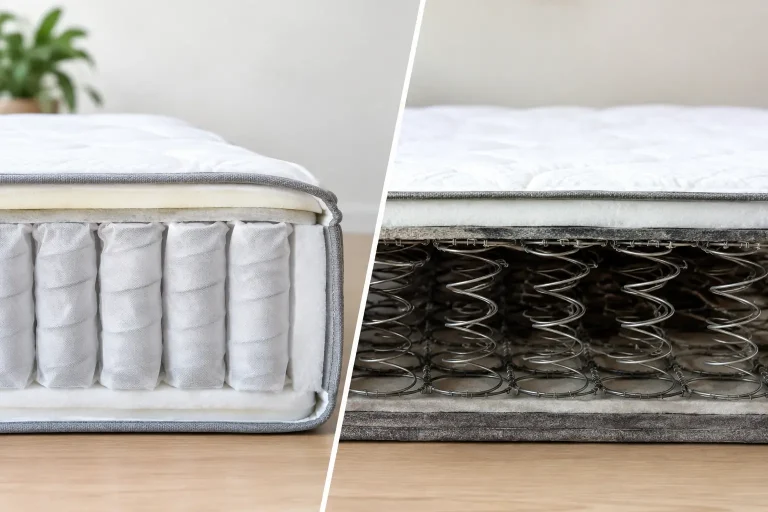
That performance gap comes down to construction. In a pocketed coil mattress, each spring is wrapped in its own fabric pocket and responds more independently. When pressure lands on one area, nearby coils compress less aggressively, so movement stays more contained. In an open coil system, springs are connected through a wire structure, which makes the surface act more like one linked unit. When one part moves, the effect travels more easily across the mattress.
For anyone sharing a bed, that difference is usually noticeable right away. A connected spring network tends to create more ripple across the sleep surface. An individually wrapped system tends to reduce that ripple and keep each sleeper on a more stable plane.
Why motion transfer matters more than people think
Most shoppers start by asking whether a mattress feels soft or firm. That makes sense, but it misses a major performance issue. A mattress can feel comfortable for ten minutes in a showroom and still disturb you all night if it transfers motion too easily.
Repeated sleep interruption affects more than convenience. Light waking can reduce time spent in deeper, more restorative sleep stages. For people already dealing with lower back stiffness, hip pressure, or joint discomfort, fragmented sleep often means waking up less recovered and more sore.
This is where mattress engineering starts to matter. If your sleep is already sensitive because of pain, stress, or a partner who moves often, motion isolation is not a luxury feature. It is part of what allows the body to rest without constant micro-disturbances.
How open coils behave under movement
Open coil mattresses, sometimes called interconnected or continuous coil systems, use springs that work together as one broader network. This design can create a supportive feel at a lower cost, which is one reason it remains common in entry-level mattresses.
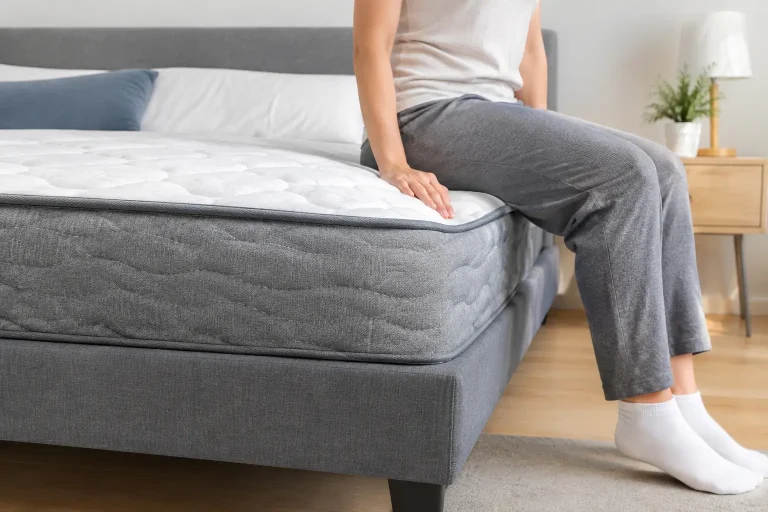
The trade-off is motion control. Because the coils are physically linked, force tends to travel. If one person sits down on the edge, changes position, or gets in and out of bed, the movement can spread through the structure more easily. That often creates the familiar bounce many people associate with traditional spring mattresses.
Bounce is not automatically bad. Some sleepers like a more responsive feel because it makes changing positions easier. But for couples, that same responsiveness can mean more disturbance at night. If one partner is a restless sleeper, the other partner usually feels more of it on an open coil mattress.
Open coils can also be noisier over time, especially as materials age and the system experiences wear. That does not happen in every case, but it is more common when springs and connecting wires take repeated pressure over years of use.
How pocketed coils reduce disturbance
Pocketed coils take a more targeted approach. Each spring moves on its own, which helps the mattress respond to pressure where it happens instead of sending it across the entire surface.
That matters for motion transfer, but it also matters for support. When coils can react independently, the mattress can do a better job of contouring to different parts of the body. Heavier areas like the hips and shoulders get support without forcing the entire bed to shift in response. That creates a steadier sleep surface and often better spinal alignment, especially for couples with different body types.
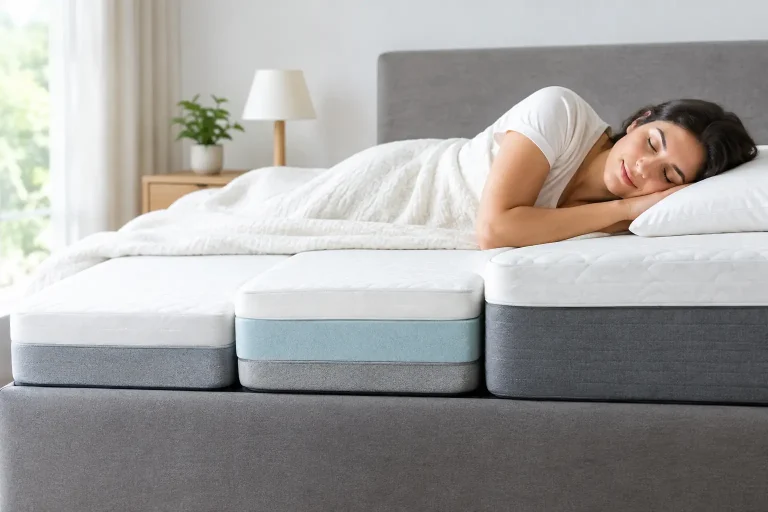
In practical terms, pocketed coils help when one person turns at 2 a.m. and the other stays asleep. They also help reduce the sensation of roll-together, where both sleepers subtly drift toward the center because the support system lacks precision.
This is one reason modern hybrid mattresses rely so heavily on individually wrapped coils. They support pressure relief layers above them while limiting partner disturbance below.
Motion transfer is not only about the coils
Pocketed coils usually win this comparison, but the full mattress build still matters. The comfort layers above the springs affect how much motion is absorbed before it reaches the other side.
A mattress with pocketed coils and well-designed foam or latex comfort layers will usually outperform a basic spring bed by a wide margin. Those top layers absorb impact, soften abrupt movement, and reduce surface vibration. If the materials are low quality or too thin, even a good coil unit may not deliver the motion control people expect.
The reverse is also true. Thick comfort layers can help reduce motion on an open coil mattress, but they usually cannot fully cancel out the connected spring action underneath. The support core still influences how movement spreads.
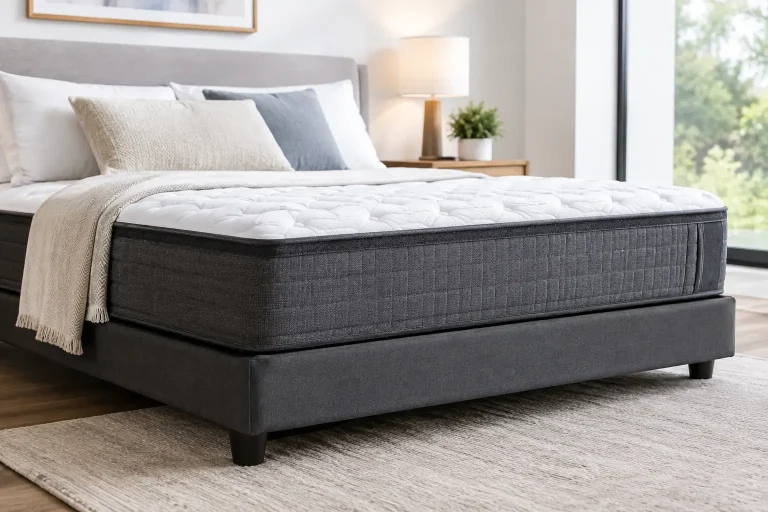
For buyers focused on peaceful sleep, the best results usually come from a combination of individually pocketed coils and comfort materials designed for pressure relief and controlled response.
Which mattress type is better for couples?
If partner disturbance is high on your list, pocketed coils are the stronger choice almost every time.
That does not mean open coils are useless. For a guest room, a child’s room, or a lower-budget mattress where occasional use matters more than precision sleep performance, open coils can still be serviceable. They may also appeal to people who prefer a more classic springy feel.
But for everyday adult use, especially in a shared bed, the limitations show up quickly. Couples tend to notice motion transfer far more than solo sleepers. One person’s comfort is no longer the only variable. A mattress has to support two sleep patterns, two body weights, and two movement profiles at the same time.
That is where pocketed coils earn their reputation. They are better suited to real-life sleep disruption – tossing, turning, late-night bathroom trips, and different schedules. For households trying to reduce wake-ups without sacrificing support, the upgrade is usually worth it.
Pocketed coils vs open coils motion transfer and back support
There is another layer to this comparison that matters for people with pain. Motion isolation and support are connected.
When a mattress shifts too much under one sleeper, the other sleeper often makes subtle muscular adjustments throughout the night. Those adjustments may be small, but over hours they can contribute to tension in the lower back, hips, and shoulders. A more stable mattress surface helps the body stay relaxed instead of constantly responding to outside movement.
Pocketed coils also tend to pair better with ergonomic zoning and hybrid comfort systems. That makes it easier to create balanced support for spinal alignment while still cushioning pressure points. For people dealing with stiffness in the morning, this combination can make a meaningful difference.
That is why brands focused on orthopedic support and low partner disturbance, including Azure Mattress, build around individually pocketed spring systems rather than basic interconnected coils. The goal is not just less bounce. The goal is more restorative sleep with fewer interruptions and better body support.
When open coils may still make sense
There are a few situations where open coils can still be a reasonable option. Budget is the obvious one. They are often less expensive, and for some shoppers price is the deciding factor.
They can also feel firmer and more buoyant, which some people interpret as supportive. If you sleep alone, are not easily disturbed, and simply want a traditional spring feel, an open coil mattress may satisfy your needs.
Still, it helps to be realistic about the trade-off. Lower cost often comes with more movement transfer, less individualized support, and a sleep surface that feels less refined over time. If you are already waking from a partner’s motion, moving from one open coil mattress to another is unlikely to solve the problem.
What to look for if motion isolation is your priority
If you are shopping specifically to cut down on partner disturbance, do not stop at the word hybrid or the word spring. Look at how the spring system is built. Individually wrapped coils are the key detail.
Then pay attention to the comfort layers above them. Latex, memory foam, or responsive pressure-relieving foams can all help absorb movement when used well. The mattress should also offer enough support to keep your spine aligned, because motion isolation alone does not help much if you wake up with back pain.
A good mattress for couples should feel stable when one person moves, supportive through the hips and lower back, and quiet under repeated use. Those are performance markers, not marketing extras.
If your current mattress turns every small movement into a shared event, the answer is usually not to sleep lighter or put up with it. It is to choose a sleep system built to contain motion where it starts, so both people get the kind of night that actually leaves them restored.